Picking a countertop sounds simple until you are standing in a showroom holding three marble samples, a quartz brochure, with absolutely no idea what you actually need. This guide cuts through the confusion.
Materials, maintenance, costs, and kitchen planning—it's all covered in this blueprint, so you can walk in knowing exactly what you want.
So Many Countertop Materials, So Little Counter Space
Common countertop materials vary in durability, maintenance requirements, and price points. The right countertop for your home depends on your cooking habits, maintenance preferences, and budget. Match the material to your lifestyle, not just your mood board.
Natural Stone: Beautiful, Porous, and Worth Every Penny
Natural stone includes granite and marble. Each one is unique, with patterns and color variation that no engineered surface can fully replicate.
All natural stone requires periodic sealing to resist staining. Without it, the surface will absorb liquids before you can wipe them up, leaving a permanent mark.
Granite Countertops: The Kitchen Workhorse
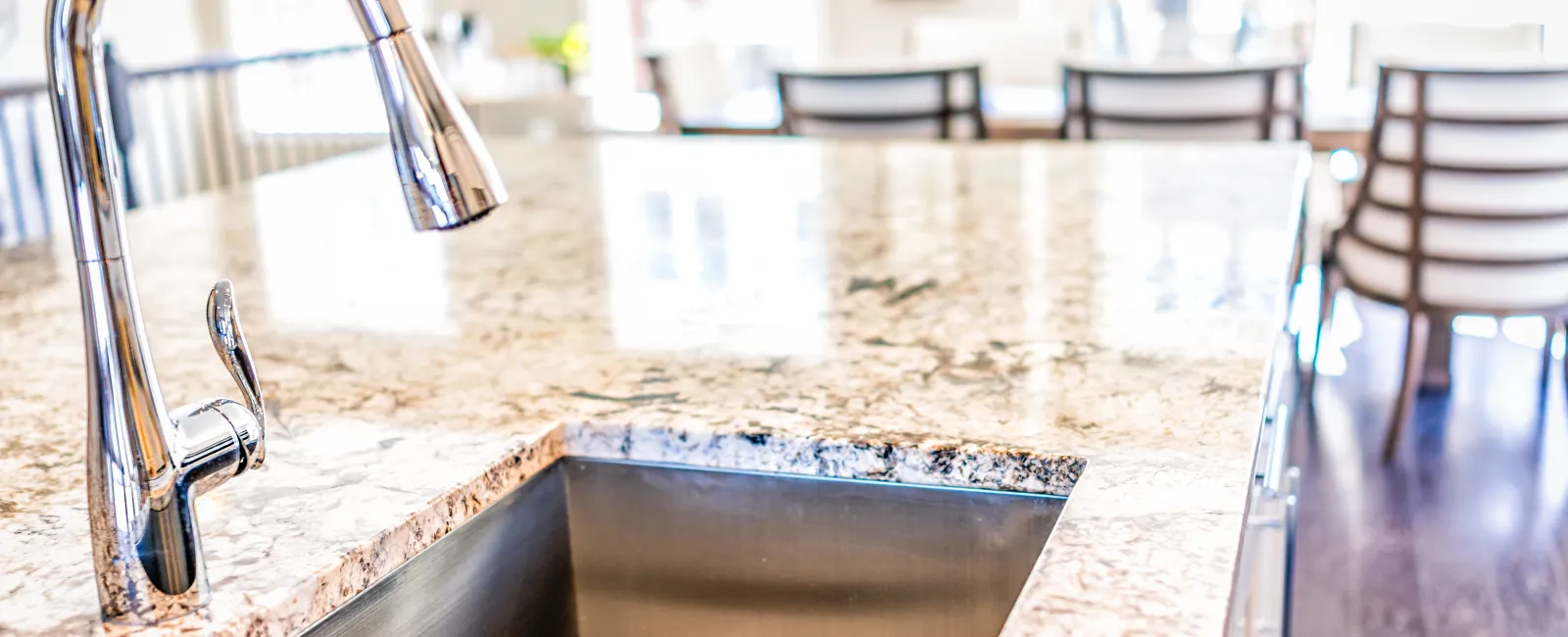
Granite countertops are heat-resistant, scratch-resistant, and built for a busy kitchen. Granite counters hold up well near the cooktop and around sinks where heavy objects and daily spills are common. Seal once a year to keep your countertop stain-resistant.
Edge treatment options range from a simple eased edge to ogee and waterfall profiles, depending on your personal style.
Granite is durable, but cleaning matters. The wrong products can dull the seal and stain the stone over time. Here is exactly how to clean granite countertops without damaging the surface. Skip the lemon juice and harsh chemicals.
Marble Countertops: High Reward, High Maintenance
Natural marble is stunning and the most demanding countertop surface in this guide. Acidic food corrodes marble countertops, and spills must be dealt with immediately to avoid staining. Regular sealing can slow damage.
Best uses: pastry prep areas, bathroom countertops, and spaces where natural beauty outweighs heavy daily function.
Quartz Countertops: Low Drama, High Performance
Engineered quartz countertops are non-porous, stain-resistant, and never require sealing. Clean with mild soap and a soft cloth. Heat resistance is the one tradeoff. A wide range of colors and finishes is available to suit most cabinets and spaces.
Solid Surface: Seamless, Repairable, Underrated
Solid surface countertops have no visible seams and can be sanded after installation to repair scratches and most stains. The surface is non-porous, hygienic, and naturally resistant to mildew, which makes it a strong fit for bathroom vanities and high-moisture areas. Integrated sinks, custom shapes, and a wide color palette let you match almost any design direction, from minimal to bold.
Laminate Countertops: Style Without the Splurge
Laminate countertops have come a long way from the dated patterns of decades past. Modern laminate offers convincing replicas of granite, marble, wood, and concrete at a fraction of the cost. The surface is non-porous, easy to wipe clean, and lighter than stone, which simplifies installation.
Heat and sharp blades are the limits to keep in mind, so cutting boards and trivets help extend the life of the surface. Laminate is a smart pick for starter kitchens, rental properties, secondary bathrooms, laundry rooms, and any space where budget and easy maintenance lead the conversation.
Kitchen Countertops: Plan Before You Pick
Measure work zones and how people move through the kitchen before choosing any material. Select the kitchen island surface first, since it tends to anchor the whole design.
Coordinate countertops with cabinet finishes early and plan cooktop and sink cutouts before anything is fabricated. Changes after cutting get expensive. At Design Tops, we serve Maryland homeowners and can walk you through the full process from slab selection to installation.
FAQs
How often should I reseal natural stone? Granite typically needs sealing once a year. Marble needs sealing every six months or more, depending on use.
Do quartz countertops need resealing? Never. That is one of its main advantages.
Which countertop material suits baking tasks? Marble is the classic choice for pastry work. Quartz works well too, and is easier to maintain..
What do I do if my countertop chips or cracks? First, do not panic. Minor chips in granite or quartz can often be filled with color-matched epoxy for a near-invisible repair. Cracks or deeper damage should go to a professional, since DIY fixes can make the issue worse. Reach out to our team for an assessment if you are not sure what you are dealing with.
If you want to see real countertop slabs in person, visit one of our locations in Annapolis, Columbia, Pasadena, or Severna Park.